Joints & mobility
Turmeric benefits: what it can do, how to take it, and why black pepper matters
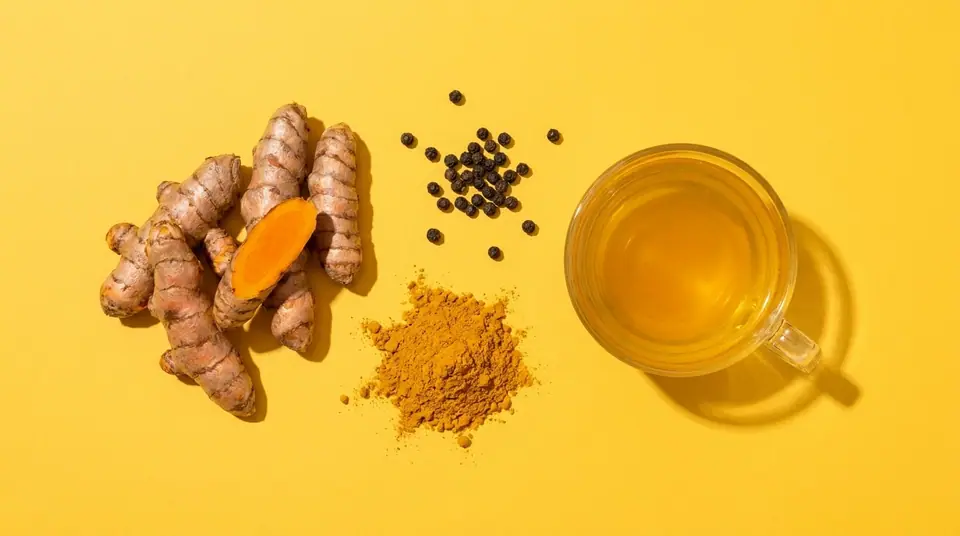
Turmeric is the orange root that colours curry, many Swahili coast dishes and a growing number of morning drinks. In Kenya you will hear it called manjano. People take it for sore joints, for “inflammation” in general and for almost every other complaint. Some of that has research behind it. Most does not.
What turmeric and curcumin are
Turmeric (Curcuma longa) is a relative of ginger. The powder in your kitchen is dried, ground root. Its best-studied ingredient is curcumin, a yellow pigment that makes up only about 3% of the powder by weight. So a teaspoon of turmeric, roughly 3 g, holds around 90 mg of curcumin.
Supplements usually contain concentrated curcumin extract instead of plain powder. That difference matters when you compare a spoon of manjano in your tea with a capsule.
Turmeric benefits that have real evidence
Laboratory studies show curcumin calming inflammation in cells. Results in people are smaller and patchier.
| Claim | What studies in people show | How sure we are |
|---|---|---|
| Eases osteoarthritis pain, especially knees | Small trials of 4–12 weeks: less pain and stiffness, close to common painkillers | Moderate, trials are small |
| Calms rheumatoid arthritis | A handful of tiny studies | Low |
| Lowers blood sugar | Slight drops in some trials of people with prediabetes | Low |
| Protects heart, brain or mood | Mostly lab and animal work | Very low |
| Cures cancer or any disease | No | None |
The joint result is the one worth knowing. A 2016 review pooled eight trials and found turmeric extracts, often around 1,000 mg of curcumin a day, reduced arthritis pain about as much as ibuprofen-type drugs. The trials were short and small, so treat it as a possible help with mild pain, not a replacement for treatment. Our guide to arthritis treatment covers what else works.
Why black pepper matters
Curcumin is poorly absorbed. Most of what you swallow passes through the gut unused, and what does get in is broken down by the liver quickly.
Piperine, the compound that makes black pepper hot, slows that breakdown. In a well-known 1998 study, 20 mg of piperine taken with 2 g of curcumin raised the amount reaching the blood about twentyfold. Fat helps too, because curcumin dissolves in fat, not water.
That is why most joint formulas pair the two. Penetrex Oral, for example, lists “Curcumin + Piperin” on the front of the bottle.
How to use turmeric at home
- In food. Add half to one teaspoon of ground turmeric to stews, beans, rice or eggs, with a pinch of black pepper and a little oil.
- Turmeric tea. Simmer one teaspoon of ground turmeric (or a thumb of grated fresh root) in a cup of water or milk for 5 minutes. Add a pinch of black pepper, some grated ginger if you like, and honey to taste. Milk gives the fat that helps absorption.
- As a supplement. Choose a product that names its curcumin content and includes piperine or another absorption aid. Follow the dose on the pack.
Fresh root stains hands, chopping boards and clothes. Lemon juice lifts most of it off skin.
How much turmeric is safe?
Cooking amounts are safe for nearly everyone. For supplements, the European Food Safety Authority set an acceptable daily intake of 3 mg of curcumin per kilo of body weight:
| Body weight | Curcumin per day |
|---|---|
| 50 kg | 150 mg |
| 70 kg | 210 mg |
| 90 kg | 270 mg |
Arthritis trials used more, usually 500 to 1,000 mg a day, but only for weeks and under supervision. If you take a supplement daily, stay with the label dose and stop for a while every couple of months.
Turmeric side effects
Food amounts rarely cause trouble. With supplements, side effects are usually:
- stomach upset, acid reflux or loose stools, mostly at high doses;
- headache or a skin rash in a few people;
- more bruising if you also take aspirin, warfarin or other blood thinners.
Rarely, turmeric supplements have been linked to liver injury, especially high-absorption products. The NIH LiverTox database records these cases. Stop at once and see a doctor if your eyes or skin turn yellow, your urine goes dark or you feel unusually tired and sick.
Skip turmeric supplements, but not food, if you are pregnant or breastfeeding, have gallstones or a blocked bile duct, are due for surgery within two weeks, or take blood thinners, diabetes medicine or drugs for stomach acid, unless your doctor agrees.
Turmeric and ginger together
The two roots are often mixed in teas and shots. Ginger has its own modest evidence, mainly for nausea, and adds flavour that makes turmeric tea easier to drink. Mixing them is safe in food amounts. It does not multiply the benefits.
When to see a doctor
See a doctor rather than reaching for turmeric if a joint is suddenly hot, red and swollen, you have joint pain with fever, pain keeps you awake every night, or a joint gives way. These point to infection, gout, injury or inflammatory arthritis that need proper treatment.
Available from BioFit
For use alongside the steps above. Each is paid for on delivery.
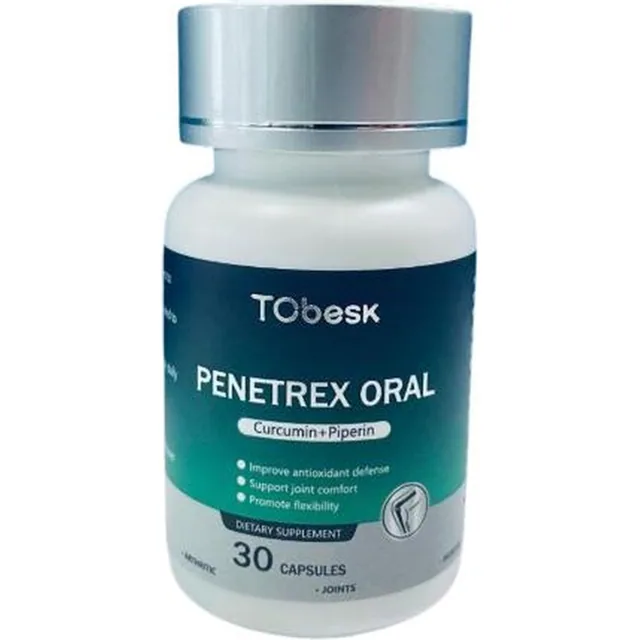
Penetrex Oral
Turmeric curcumin paired with black-pepper piperine, taken by mouth for stiff, sore joints.
KES 5,990 · 30 capsules
Questions people ask
Is it safe to take turmeric every day?
In cooking amounts, yes. For supplements, the European Food Safety Authority puts the acceptable daily intake of curcumin at 3 mg per kilo of body weight, about 210 mg for a 70 kg adult. Studies that used more ran for weeks, not years, so take breaks and tell your doctor.
Does turmeric help knee pain?
It can take the edge off osteoarthritis pain for some people. In small trials, curcumin extracts worked about as well as common painkillers over a few weeks. It does nothing for a torn ligament or an infected joint.
What is turmeric called in Swahili?
Manjano. You will find it as fresh root and as powder in markets and supermarkets across Kenya.
Can I take turmeric with diabetes medicine or blood thinners?
Ask first. Curcumin may lower blood sugar a little and can add to the effect of blood thinners such as warfarin or aspirin. Food amounts are not the worry; daily supplements are.
How long does turmeric take to work?
Trials measured changes after 4 to 12 weeks. If you notice nothing after two months of regular use, it is unlikely to help you.
Sources
- NCCIH (US National Institutes of Health): Turmeric — usefulness and safety
- Shoba G. et al. Influence of piperine on the pharmacokinetics of curcumin in animals and human volunteers. Planta Medica, 1998
- Daily J.W. et al. Turmeric extracts and curcumin for joint arthritis: systematic review and meta-analysis. Journal of Medicinal Food, 2016
- EFSA: Scientific opinion on the re-evaluation of curcumin (E 100) as a food additive, 2010
- LiverTox (NIH): Turmeric