Joints & mobility
Knee pain: what causes it and how to treat it at home
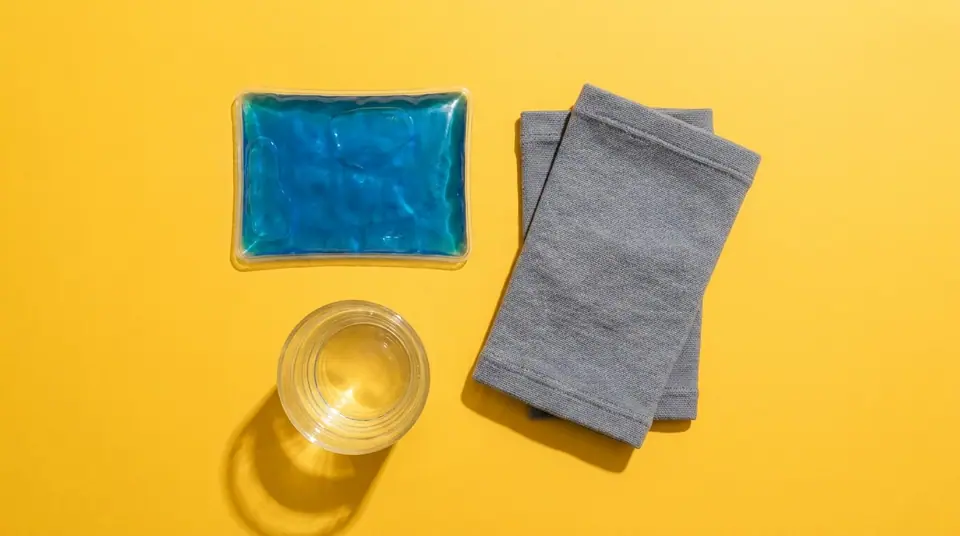
The knee carries the whole body through every step, stair and squat, so it is among the joints that hurt most often. Most knee pain that starts without a clear injury gets better with simple, regular exercise.
Common causes of knee pain
| Cause | Typical person | What it feels like |
|---|---|---|
| Osteoarthritis | Over 45, heavier, years of standing or farm work | Ache on walking and stairs, stiffness after sitting, creaking |
| Pain around the kneecap | Teenagers to 40s, women, runners, people who squat a lot | Ache at the front, worse on stairs, squatting or after long sitting |
| Meniscus tear | Twisting injury in sport, or older knees during a deep squat | Pain on one side, catching or locking, swelling the next day |
| Ligament injury | Football, falls, boda boda accidents | A pop, quick swelling, the knee giving way |
| Tendon pain | Jumping, running, sudden increase in training | Pain just below or above the kneecap |
| Gout | Men over 30 | Sudden red, hot, very swollen knee, often at night |
| Baker’s cyst | People with arthritis | Tight swelling at the back of the knee |
Knee pain without an injury in an adult over 45 is most often osteoarthritis, the subject of our arthritis treatment guide. In younger adults it is most often pain around the kneecap.
Why knee pain is more common in women
Women report knee pain more often than men, for a few reasons:
- Wider hips change the angle at which the thigh meets the knee, pulling the kneecap slightly sideways.
- Weaker thigh and hip muscles, relative to body weight, let the kneecap track less evenly.
- Menopause speeds up cartilage wear, and knee osteoarthritis is clearly more common in women after 50.
- Pregnancy and carrying children add load and loosen ligaments for a time.
Strengthening exercises help women just as much as men, often more.
The fastest way to relieve knee pain
For a flare of pain that is not an injury:
- Ease off, do not stop. Avoid what triggers it (deep squats, stairs, kneeling) for a few days, but keep walking on the flat.
- Ice or heat. Ice wrapped in a cloth for 15 to 20 minutes for swelling; a warm cloth for stiffness.
- Rub in a gel or balm. An anti-inflammatory gel from a chemist is the first choice for knee arthritis. Some people also find a warming balm, massaged in, soothing.
- Raise the leg when you sit, if the knee is swollen.
- Use a stick in the hand opposite the sore knee for a week or two.
Five exercises for knee pain
Do these daily. They strengthen the muscles that take load off the knee.
- Thigh squeeze: sit with the leg straight, press the back of the knee into the floor, hold for five seconds. 10 times.
- Straight leg raise: lying on your back with the other knee bent, lift the straight leg to the height of that knee. 10 each side.
- Sit to stand: stand up from a chair without using your hands, sit down slowly. 10 times.
- Step-ups: step onto the bottom stair with the sore leg, then down. 10 times, holding the rail.
- Hamstring stretch: sit on the edge of a chair, one leg straight with the heel on the floor, lean forward gently until you feel a stretch behind the knee. Hold 20 seconds.
A little discomfort is fine. If the knee stays worse for more than two hours afterwards, reduce the repetitions.
Knee pain treatment from a doctor
If home care does not help within a few weeks, a doctor or physiotherapist can:
- examine the knee and order an X-ray or scan when needed;
- set a supervised exercise programme;
- prescribe stronger anti-inflammatories for a short time;
- give a steroid injection for a flare of arthritis;
- refer you for keyhole surgery for a torn meniscus that keeps locking, or a knee replacement when arthritis is severe.
Weight matters more than most treatments for arthritic knees: each kilo lost removes about four kilos of load from the knee with every step.
When to see a doctor
See a doctor the same day if the knee is hot, red and very swollen, you have a fever, you cannot put weight on it, it looks deformed after a fall, or it locks and will not straighten. Book a visit if pain lasts more than two or three weeks despite home care.
Available from BioFit
For use alongside the steps above. Each is paid for on delivery.

Penetrex Balm
A 50 g balm you rub over the knee, back or shoulder that aches. Skin only, never swallowed.
KES 5,990 · 50 g tube
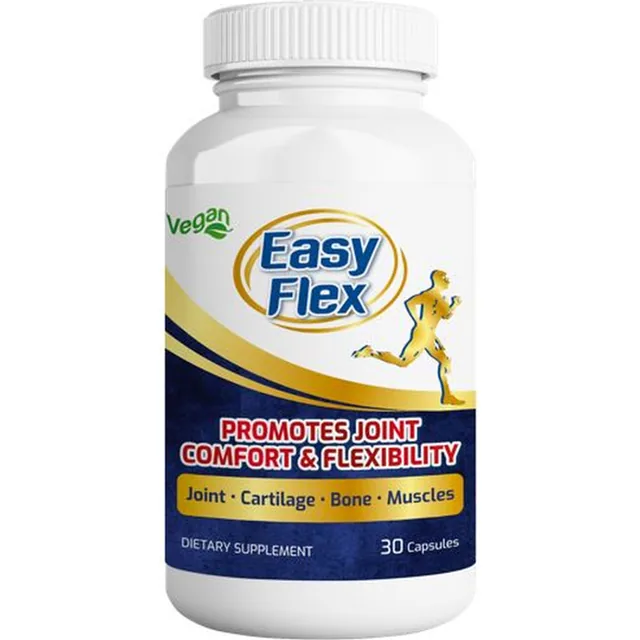
Easy Flex
Plant-based capsules aimed at the whole joint: cartilage, bone and the muscles around it.
KES 6,500 · 30 capsules
Questions people ask
Why does my knee hurt when I climb stairs?
Stairs press the kneecap hard against the thigh bone. Pain there usually comes from the cartilage behind the kneecap or early arthritis, and strengthening the thigh muscles is the main fix.
Is walking good for knee pain?
Yes, for most knee pain. Walk on flat ground in cushioned shoes, start with what is comfortable and add a few minutes each week. Rest for a day or two only after an injury or in a bad flare.
Should I use ice or heat on my knee?
Ice for 15 to 20 minutes when the knee is swollen or after an injury, wrapped in a cloth. Heat when it is stiff, for example in the morning or before exercise.
Can knee pain come from the back or hip?
Yes. A trapped nerve in the lower back and hip arthritis can both be felt in the knee. If the knee looks and moves normally but still hurts, a doctor will examine the hip and back too.