Prostate & men’s health
Enlarged prostate: symptoms, night urination and what helps
The prostate keeps growing slowly through a man’s life. By the fifties, it is large enough in about half of men to press on the urine tube that runs through it, and by the eighties in up to nine men out of ten. Doctors call this benign prostatic hyperplasia, or BPH. Benign means it is not cancer.
Enlarged prostate symptoms
| Problems with emptying | Problems with storing |
|---|---|
| A weak or slow stream | Needing to go often in the day |
| Waiting for the stream to start | Waking at night to pass urine |
| Straining to push urine out | A sudden urge that is hard to hold |
| The stream stopping and starting | Leaking on the way to the toilet |
| Dribbling at the end | |
| Feeling the bladder has not emptied |
How much the prostate has grown does not match how bad the symptoms are. A slightly enlarged gland can cause a lot of trouble, and a large one very little.
Frequent urination at night
Getting up at night to pass urine is often what sends men to a doctor. BPH is a common cause, but not the only one:
- drinking a lot in the evening, especially tea, coffee or alcohol;
- high blood sugar (signs of diabetes);
- water tablets taken late in the day;
- swollen ankles that release fluid when you lie down, sometimes a sign of heart problems;
- poor sleep and snoring with breathing pauses.
A simple diary for three days, noting what you drink, when, and how often you pass urine, helps the doctor find the cause.
Is it cancer?
BPH does not cause cancer. But prostate cancer is the most common cancer in Kenyan men, and early cancer usually has no symptoms at all. Men of African descent also get it younger and more aggressively.
Ask for a PSA blood test and a prostate examination:
- from 45, as advised for men of African descent, or
- from 40 if your father or brother had prostate cancer.
A raised PSA can come from BPH or infection too, so it is a reason for further checks, not a diagnosis.
Foods and drinks to limit
- Evening fluids: drink well in the day, then little in the two hours before bed.
- Caffeine and alcohol, which make the bladder fill faster and more urgently.
- Very spicy food and fizzy drinks, which irritate the bladder in some men.
- Too much salt, which can raise night-time urine.
What to eat more of: vegetables, fruit, beans, fish and whole grains. Keeping your weight down and avoiding constipation both take pressure off the bladder. Tomatoes and pumpkin seeds are often recommended; evidence for them is weak but they are healthy food anyway.
Natural remedies that have evidence
- Plant sterols (beta-sitosterol). A Cochrane review found they improved symptom scores and urine flow in the short term, without shrinking the prostate. ProstaGenix is built on these; its label states more than 1,000 mg of total sterols.
- Pumpkin seed extract. Some trials show modest symptom relief.
- Bladder training. Gradually stretching the time between toilet visits helps urgency.
- Double voiding. Pass urine, wait a minute, then try again before leaving the toilet.
- Regular exercise, which is linked to fewer urinary symptoms.
Saw palmetto, the best-known prostate herb, did no better than a dummy pill in the largest and best-run trials.
Medical treatment
| Treatment | How it works | What to expect |
|---|---|---|
| Alpha-blockers (tamsulosin) | Relax the muscle around the urine tube | Better flow within days; can cause dizziness and less semen |
| 5-alpha-reductase inhibitors (finasteride, dutasteride) | Shrink the prostate | Effect builds over 6–12 months |
| Both together | Combined effect | For larger prostates and stronger symptoms |
| Tadalafil | Relaxes bladder and prostate muscle | Helps both urinary and erection problems |
| Surgery (TURP and newer methods) | Removes or opens the blocking tissue | For severe symptoms, stones, retention or kidney effects |
When to see a doctor
Go to hospital now if you cannot pass urine at all and your lower belly is swollen and painful. That is urinary retention and needs a catheter. See a doctor today if you have fever with urinary symptoms, and soon if you see blood in your urine or have pain in your sides.
Men under 50 with pelvic pain rather than a weak stream should read our prostatitis guide.
Available from BioFit
For use alongside the steps above. Each is paid for on delivery.
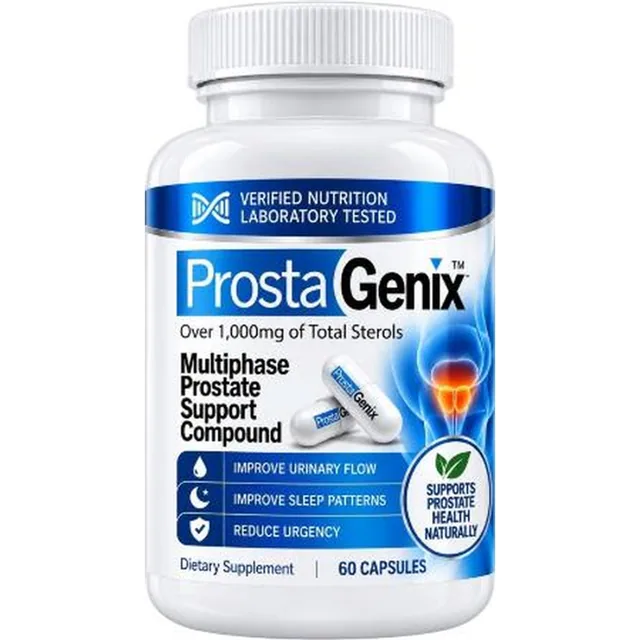
ProstaGenix
Plant sterols for men past 50 who are up at night to pass urine and never feel fully empty.
KES 6,500 · 60 capsules
Questions people ask
Can an enlarged prostate shrink back to normal?
Not on its own. Finasteride or dutasteride can shrink it by about a quarter over six to twelve months, and surgery removes the part that blocks the urine tube.
How many times is it normal to wake at night to urinate?
Once a night is common after 60. Waking two or more times regularly is called nocturia and is worth checking, whatever your age.
Is an enlarged prostate the same as prostate cancer?
No. BPH is not cancer and does not turn into cancer, but the two can exist together and early cancer often has no symptoms. That is why a PSA test and examination are part of the check-up.
Does an enlarged prostate affect erections?
BPH itself does not usually cause erection problems, but the two often appear at the same age. Some BPH medicines reduce the amount of semen or affect desire; ask your doctor about alternatives if that bothers you.
Does saw palmetto work for an enlarged prostate?
Large, well-run trials found saw palmetto no better than a dummy pill for urinary symptoms. Plant sterols such as beta-sitosterol have better evidence for easing symptoms.
Sources
- NIDDK (US National Institutes of Health): Prostate enlargement (benign prostatic hyperplasia)
- NHS: Benign prostate enlargement
- Cochrane review: Beta-sitosterols for benign prostatic hyperplasia
- Cochrane review: Serenoa repens (saw palmetto) for lower urinary tract symptoms due to benign prostatic enlargement, 2023